NDA’s have been used by the church to prevent victims of sexual abuse and other misconduct from discussing the abuse, presumably after reaching a settlement with the church.
Pressuring a victim to sign an NDA seems to me to be a rather tawdry attempt by the church to protect its increasingly tattered reputation.
That meeting occurred in early December and was reported on by the Anglican Journal on December the 9th.
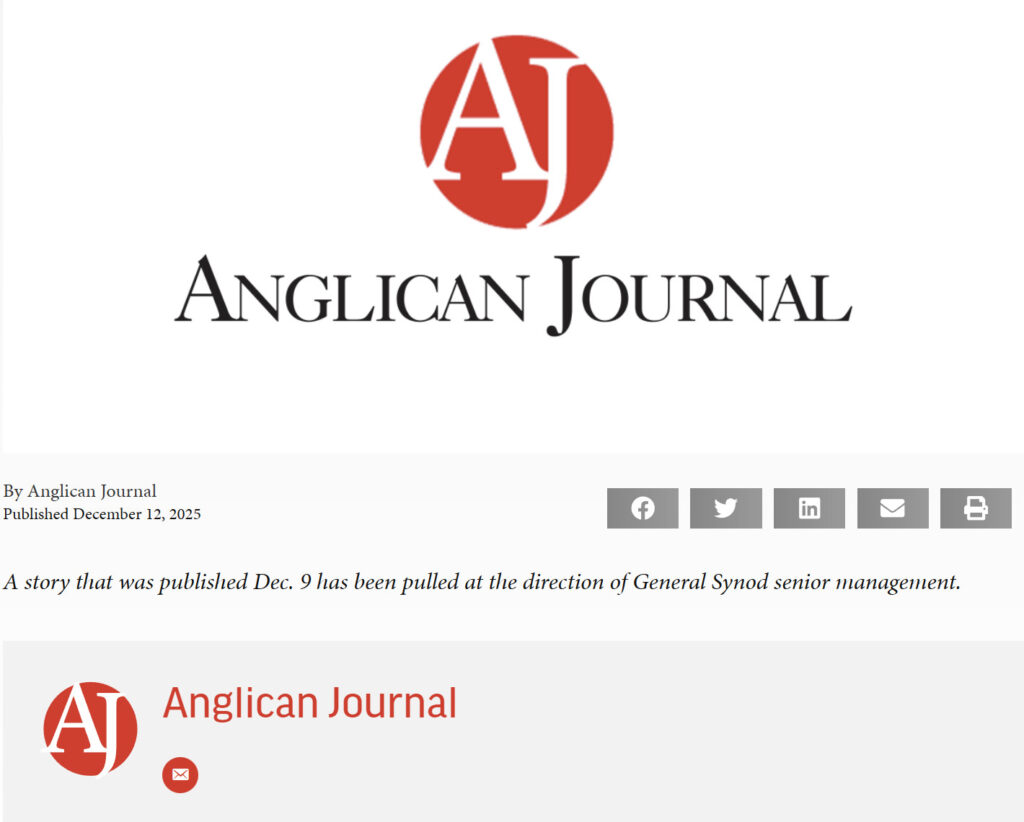
In an ironic twist that would be difficult to invent, the article is now the victim of an NDA: it has vanished and been replaced with the following:
Of course, not much really disappears from the Internet so, for your edification, here is the article:
CoGS debates resolution on non-disclosure agreements
It took Julie Macfarlane, now a retired professor of law at the University of Windsor, four decades to come forward about the sexual abuse she suffered at the hands of a Church of England priest when she was a teenager. So when the church asked her to sign a non-disclosure agreement (NDA), she refused.
“I said immediately to my lawyer that I’d spent 40 years keeping this a secret and I wasn’t going to sign an NDA now,” she said. The church did not pursue it any further, she said, and Macfarlane insisted on personally drafting new guidelines for NDA use to be used by Ecclesiastical Insurance as part of her eventual settlement.
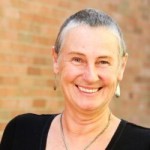
Julie Macfarlane Photo: Braunte Petric
Spurred by that first-hand experience, Macfarlane has since spent years urging churches, universities and other institutions to end the use of NDAs in cases of misconduct, abuse, harassment or discrimination with the organization she co-founded, Can’t Buy My Silence (CBMS). She has worked with Anglicans in Australia, the United Kingdom and Canada, including with the Rev. Jeffrey Metcalfe, who brought a resolution to June’s General Synod asking the national church to take its own stand against the misuse of NDAs.
Council of General Synod (CoGS) has now reopened discussion of that resolution, which called the church to scrap the use of non-disclosure agreements (NDAs) in cases of misconduct, discrimination or harassment. Metcalfe’s original resolution was the subject of intense discussion at June’s General Synod gathering after Canon (lay) Clare Burns, chancellor of General Synod, pointed out several clauses which she said posed problems of legal and insurance liability. The motion was deferred to CoGS, whose members picked it up at the council’s meeting this November.
In an informal breakout group discussion, CoGS members outlined the need for further information on the original purpose of the resolution and a clear breakdown of the specific dangers its current draft posed as discussed at General Synod. They also discussed what the role of the national church body should be in the discussion around NDAs. Summarizing on behalf of his table group, deputy prolocutor Brian Lee said General Synod’s role was to ensure that the intent of the resolution was implemented while accounting for any liability concerns involved.
“We need to keep the objective while getting rid of the pitfall,” he said. “[And also] not take too much of the fang out of it.”
Several dioceses across the Anglican Church of Canada are in the process of creating or passing resolutions curtailing or banning the use of NDAs.
When the original resolution was tabled in June, Burns (who has announced her intention to resign as chancellor by the end of 2025) pointed out several clauses she said were either impossible to implement or could expose the church to lawsuits. For example, one section instructed the church not to use NDAs unless the complainant asked for one “after having had the opportunity to obtain independent legal advice that includes advice on alternative means to protect the confidentiality of their personal information.” It is impossible for the church to verify the specifics of any advice a complainant receives from a lawyer, she said, as any such advice would be covered by attorney-client privilege.
Another clause directed the primate and officers of General Synod to contact any previous complainants and advertise the availability of pastoral support. Contacting a complainant after a settlement had been made could be a breach of the terms of the settlement, said Burns. Also, she added, pastoral supports are already part of any settlements the church makes with complainants in cases of misconduct. Reaching out to offer additional supports could be construed as saying that not enough had been offered to begin with, which she said might open the church to liability.
“It’s tantamount to saying that somehow we think more than what we’ve already done is needed. Our insurers are not going to let us do that. Or what they’re going to say to us is, ‘If you do it, you are not insured for whatever happens next,’” she said.
Burns said to her knowledge, General Synod has not requested any complainant sign a non-disclosure agreement at any time during the past 25 years. Speaking to CoGS in November, she also clarified that NDAs are distinct from non-disparagement clauses. The latter are not legally binding in the way NDAs are, she told CoGS. But she said the church does use them as a way of reminding signatories that the intent of a settlement is to put any further claims against the church to rest.
In June, Burns recommended the resolution be amended to include the phrase “subject to legal advice” in some sections she pointed out as problematic, allowing the church some discretion about how to implement them. The resolution’s mover and seconder, Metcalfe and Bishop Sandra Fyfe, of the diocese of Nova Scotia and Prince Edward Island, declined this phrasing due to concerns the church’s lawyers could be more likely to prioritize protecting the institution over the purpose of the resolution.
Nevertheless, Metcalfe told the Anglican Journal he is open to any good faith effort to redraft the resolution. He said he hopes any such redrafting reflects the broad agreement he heard at General Synod that many Anglicans want to prevent and repudiate any misuse of NDAs.
“I don’t think the chancellor, I don’t think Clare, would disagree with that,” he said. “I think it’s totally fair to say that the legislation we put forward is not perfect. I think my interest will be to see how the spirit of what it’s trying to put forward can be taken up in a way that helps achieve that spirit.”
Metcalfe’s home diocese of Quebec is one of several across the country which have drafted or are in the process of drafting similar resolutions ending or limiting their use of NDAs. Quebec’s resolution, passed in May, endorsed the principles embodied in—and asks its bishop to sign—the “faith pledge” put forward by anti-NDA nonprofit Can’t Buy My Silence (CBMS). It reads, in part, “We pledge never to request another party to submit to an NDA to stop them from raising complaints or discussing incidents of sexual harassment, abuse, or misconduct, discrimination, retaliation of bullying or other harassment.”
The diocese of Edmonton’s new safe church policy likewise contains language promising it will, “when appropriate, seek to limit the usage of nondisclosure agreements as a condition for the resolving or settling of a complaint.”
The Anglican Journal has also confirmed that the ecclesiastical provinces of British Columbia and Yukon and of Northern Lights are working on policies of their own.
The diocese of Nova Scotia and Prince Edward Island, meanwhile, has already passed a resolution ending its use of NDAs in cases of misconduct and endorsing CBMS’s faith pledge. It was not a difficult decision to make, said Cynthia Pilichos, the mover of the resolution and a member of the diocesan social justice organization Anglicans Powering Potential. That was in part because the use of NDAs is already illegal in Prince Edward Island in cases of discrimination, harassment or sexual misconduct unless the complainant asks for one. As a result, she said, the diocese cannot use them in that part of its coverage area anyway. And it has a choice whether it wants to look like it is ahead of the law in Nova Scotia or just doing what it is required to, she said.
“I think the church doesn’t make itself look very good when it’s hesitating on things like that. They don’t have a good track record with respect to sexual misconduct … with respect to the residential schools and the abuse and misconduct there.”
Pilichos said she first became interested in what she said is the harm NDAs can do when attending a talk at her local YWCA by Macfarlane and CBMS. Macfarlane founded CBMS with Zelda Perkins, a former assistant of former film producer Harvey Weinstein, who has been convicted of rape and accused of more crimes by dozens of women. The organization advocates for reform in the use of NDAs and publishes research on the impacts they have on complainants who sign them.
According to a report published on its website, 93 per cent of respondents to a survey of people who either had signed an NDA or who “couldn’t say [if they had] for legal reasons” reported mental health impacts from having signed one. Respondents reported effects including anxiety, isolation and ongoing trauma. “The pressure to stay silent can exacerbate mental health issues, including depression and PTSD,” the report read.
While NDAs do not prevent signatories from speaking to therapists, counselors or trusted loved ones about their experiences, Macfarlane told the Journal, many either do not realize that or feel honour-bound to silence. The lawyers and organizations who use NDAs are not always aware of these impacts, she said.
“[Because] they’ve signed something, they feel obligated. And also, of course, there’s the threat that if they break it, they could lose whatever compensation they’ve received. So when I explain that to lawyers, 95% of them are like, ‘Oh my goodness, I had no idea.’”
CBMS’s faith pledge is one of several pledges the organization has created, with others targeted at universities, corporations and unions. They’re intended to put pressure on governments to push the issue forward by building a moral consensus, she said. Legal jurisdictions from P.E.I. to Texas, the United Kingdom and Australia have introduced bills banning NDA use in misconduct and discrimination cases, she added. So signing the pledge also offers organizations an opportunity to demonstrate their own concern over the issue before legislation reaches their jurisdictions, she said.
“To say, ‘Yes, we didn’t actually realize these were harmful and we’re not going to do them any longer’ … looks better than saying, ‘Okay, we’re going to stop doing it now because it’s illegal,’” Macfarlane said.
Karen Webb, chancellor of the ecclesiastical province of the Northern Lights and a member of the Anglican Journal’s editorial board, said the church has more to gain reputationally by promising not to use NDAs than it does by keeping them as an option. In the past, organizations have used them to try to prevent damaging allegations from going public, she said. But today, they make an organization look like it has something to hide while social media allows rumours to circulate anyway, she said. Conversations in her own province have concluded it is better for the church to show openness and—should a rare false accusation arise—prove its employee’s innocence rather than try to keep the issue out of the public eye.
Regarding the potential liability issues Burns pointed out in her speech at Synod, Macfarlane pointed to several churches which have made similar resolutions on NDAs, including the Anglican Church of Australia. Its synod passed a 2024 resolution against using NDAs and subsequently sent out an apology to all its past signatories, she said.
She could see why it might be a concern from a lawyer’s perspective that past signatories might take the offer of pastoral care recommended in the June draft of the resolution as an admission that not enough had been offered during settlement, she said. But she added that neither the Anglican Church of Australia nor any of the other institutions who have signed a CBMS pledge have so far had any problems with liability or anger from previous complainants. Instead, she said, not feeling silenced has given them less reason to be angry and less reason to take to social media with their grievances. “Lawyers are trained to be catastrophists,” she said. “So they put everything they can possibly think of into an agreement just in case there’s a 1 per cent chance.” This is also why she believes including the phrase “subject to legal advice” would render any resolution useless, she said—lawyers are likely to recommend every precaution available, including NDAs.
Asked to comment by the Anglican Journal, Burns replied to this point saying “Professor Macfarlane may find it unlikely that someone would sue but my job is to identify risks to the [General Synod], which I did.” She reiterated that the General Synod has not sought an NDA in any case during her time as chancellor or vice chancellor. Throughout the process, Burns has not made any statement to the Journal, General Synod or CoGS on how church leaders should legislate on NDAs beyond her comments on the problems she says are raised by the phrasing of the resolution on them.
At CoGS, members also mentioned that General Synod could play a role in leading a conversation on NDAs for dioceses and provinces across the Anglican Church of Canada with its resolution. However, decisions made at the national church are not binding on individual dioceses, which are free to make their own policies.
Correction: This article has been emended from an earlier version, which incorrectly stated that Burns had not made any comments to the Journal, General Synod or CoGS related to NDAs other than the problems she said are raised by the phrasing of the resolution.

 The Anglican Church of Canada believes that everyone is created in God’s image and that all members of society have an equal right to participate meaningfully in the public square at all levels. We have been enriched, as a church, by our relationships with other Christian denominations, along with the great variety of religious traditions that are found across our communities. Canada’s longstanding commitment to religious pluralism has enabled members of many faith communities and those with no faith commitment to live in civic harmony with one another without sacrificing their respective theological convictions.

 Pastoral statement from the Primate and Metropolitans of the Anglican Church of Canada concerning the Anglican Communion
 Queer Interfaith Coalition letter endorsed with amendment recognizing diversity of opinion on marriage canon General Synod passed a resolution June 29 endorsing an open letter to the Canadian government from the Queer Interfaith Coalition, an organization which supports LGBTQ+ acceptance across different religious groups.
 In a follow-up interview with the Journal, Parker added that he planned, as primate, to continue down the route of change set up by the listening process that brought forth the transformational commitments and the primate’s commission’s pathways—the set of recommendations calling for dramatic change in the church.
 Curry also spoke about the limitations of Jesus’ disciples, noting that four of them—Peter, Andrew, James and John—were fishermen, yet never catch any fish in the Bible and relied upon Jesus to feed the multitude.