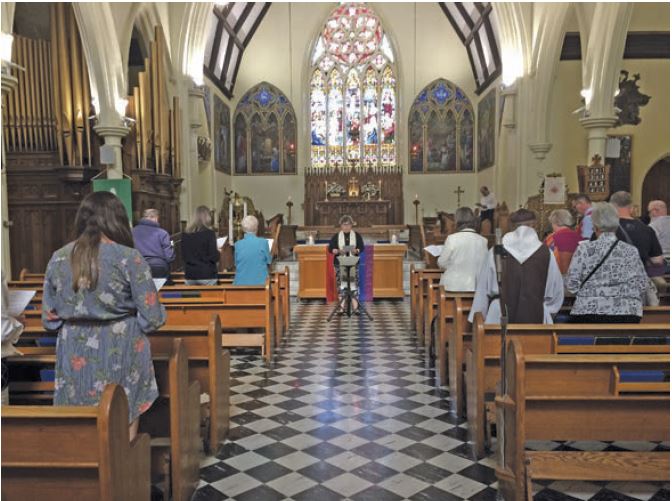
Yes, I know ‘dialogue’ and ‘conversation’ mean much the same thing, so one of the words is redundant, but that’s how the diocese has described their latest tête-à-tête on the issue that is eventually going to result in the diocese becoming redundant. When you see ‘dialogue’ and ‘conversation’ not just in the same sentence but contiguously in the same sentence, rest assured, the judgment of Babel has already been visited on the perpetrators.
What succulent fruit has sprung from the dialogue conversations? Weariness, fear, anxiety, pain and polarisation.
The only question left to ask is: this is so wonderful, why has the Anglican church waited so long?
Bishops report on Marriage Canon Dialogue conversations
- A feeling of weariness
- Fear of what the vote at General Synod 2019 will mean, both in the diocese and in the rest of the Communion
- In spite of the fear, we want to stay together.
- Need to include the insights of youth and children
- Need to care for those who are feeling left out
- There is a deep longing and need to talk about scripture and theology
- There is a need to have resources, and to have pastoral care that is contextualized
- People feel polarized but they do so within the Big Tent
- Concerns about our international relationships
- There is a degree of pain avoidance
- Anxiety about being labelled
- We’re already living with diversity and we need to hold up that we’re unified in Jesus Christ
- While there is weariness and fear, there is a need to move on with courage and hope and faith
 Disgraced ex-cleric David Norton’s legal troubles appear to go way beyond the criminal courts.
 I think I am also beginning to see a general loosening of our love affair with bricks and mortar: The property we own as a Diocese is a strategic asset, it’s true. But perhaps not in the ways we used to think about it. The fact is, churches have life cycles. They were and are planted according to key demographics, they have a beginning to their life, a middle and an end. The truth is, very few churches live for a century and fewer still live to see two – unless it is this venerable and beautiful cathedral that we are meeting in today. Parishes and church buildings are meant to spring up where the mission fields are. And when it is very clear that they have come to the end of their life cycle it is incumbent on us – the stewards of those resources – to redeploy those assets as needed for a new mission field – as intended by their founders: Christians who gave money to the church to be the church.
 The Anglican Journal has