
General Secretary of the World Council of Churches to visit Canada

From here:

On March 13, the Rev. Dr. Olav Fykse Tveit, General Secretary of the World Council of Churches (WCC), will visit General Synod offices to learn about the full communion relationship between the Anglican Church of Canada (ACC) and the Evangelical Lutheran Church in Canada (ELCIC).

I could have saved, the Rev. Dr. Olav Fykse Tveit the airfare.

Olav, the Anglican Church of Canada and the Evangelical Lutheran Church in Canada have both succumbed to a rampant liberalism which has, by and large, displaced any pretensions they might have once had of being Christian. Consequently, they are losing members, money and credibility: they can’t even afford to have independent synods and are considering sharing office space.

So it’s understandable that they would want coordinate their efforts to flush themselves down the toilet of theological liberalism. It’s not only an act of pious ecumenism, but it’s green – less water.

The Anglican Church of Canada appoints a special government advisor

“Special government advisor” is an odd title since it seems to imply that the Canadian government is seeking advice from the Anglican Church; I know we are in difficult financial times, but surely Ottawa is not that desperate.
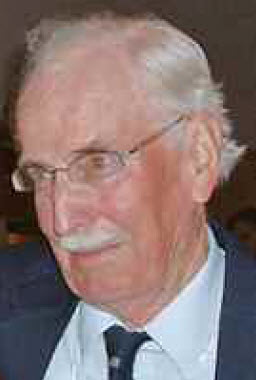
The Rev. Laurette Gauthier Glasgow will agitate for “peace and justice” in the form, I imagine, of the Millennium Development Goals.

When she was assistant rector of All Saints, Belgium, she was already eager to advise the government on how to govern:

Let us encourage governments, business leaders, and members of civil society to be inspired by our more dynamic concept of abundance. As they seek to reform the global system and address global challenges, may they find true abundance in the midst of need so that we might eradicate need in the midst of abundance.

One presumes that the Belgian government was not entirely receptive to Rev. Glasgow’s “encouragement”, so now she is going to give the Canadian government the benefit of her insights. This doesn’t have much to do with the gospel of the atoning sacrifice of Jesus Christ, of course, but there is little left in the Anglican Church of Canada that does.

From here:

The Rev. Laurette Gauthier Glasgow has been appointed Special Advisor for Government Relations for the Anglican Church of Canada (The General Synod and the Diocese of Ottawa) while also continuing as Incumbent for the Parish of St. James, Leitrim, in the Diocese of Ottawa.

In a joint announcement, Archbishop Fred Hiltz, Primate of the Anglican Church of Canada, and Bishop John Chapman of Ottawa, expressed delight in co-sponsoring this half-time position that responds to a long-standing desire on the part of the church to establish a government relations presence in Ottawa. This was also a key recommendation from Vision 2019, endorsed at General Synod 2010.


A parishioner who disbelieves in the Resurrection asks if he should stay in the Anglican Church of Canada

Angus Hamilton doesn’t believe that God is a trinity of persons, doesn’t believe in the supernatural, the Resurrection, the after-life, heaven and hell or that the Bible is God’s written revelation to man.

This has driven him to wonder whether he should leave the Anglican Church of Canada. Angus, if your fear is that you may feel out of place if you continue in the Anglican Church of Canada, rest assured, you will fit right in.

From here (page 1):

“I believe in a God of the Universe who created the laws of physics and chemistry and the processes that have enabled life to evolve and to continue evolving on planet earth.

“I don’t believe in a personal God, in an old avuncular figure who created the world and all that is in it about 7,000 years ago.

“I believe the Bible is a valuable book of wisdom to be read as all great literature is read, – as stories that convey an important message.

“I don’t believe that the Bible is literally true. “I believe that the idea of heaven and hell was conceived by a tribal leader who couldn’t otherwise persuade his tribe to do what he thought they should do, and that it has been widely used in governance ever since.

“I don’t believe in an after-life, in heaven and hell. “I believe there is a higher power that mankind does not yet understand, just as it did not understand electromagnetic radiation until about 300 years ago. “I don’t believe in the supernatural. Thus there is much in the Bible, including the resurrection story, that I do not believe. “I believe in the teachings of Jesus that can definitely be attributed to him.

“I don’t believe that everything in the Bible attributed to Jesus was said or done by him.

“I believe that the concept of ‘Church’ is important, and that a quite different form of church will evolve.

“I don’t believe that the established churches can continue with ‘business as usual.’”

St. George's Anglican Church, Montreal to receive government hand-out

From here:

Media Advisory: Government of Canada to Announce Support to St. George’s Anglican Church National Historic Site

MONTREAL, QUEBEC, Feb 21, 2012 (MARKETWIRE via COMTEX) — On behalf of the Honourable Peter Kent, Canada’s Environment Minister and Minister responsible for Parks Canada, the Honourable Judith Seidman, Senator, will make an infrastructure announcement regarding the conservation and presentation of the St. George’s Anglican Church National Historic Site.

St. George’s, is an historic site and will be a recipient of government largesse; to put it another way, taxpayers will pay for its upkeep.

I’m not averse to paying for the upkeep of an historically or aesthetically significant building, but there is a degree of irony in a church degenerating to this status: the activity for which it was built – housing worshipping Christians – can no longer attract enough people to pay for its upkeep. Or, more correctly, the Anglican Church of Canada’s confused, sub-Christian concoction of neo-paganism and eco-cultism is not attracting enough people.

The irony is reinforced by that fact that the Anglican Church of Canada has recently spent a great deal of money on lawsuits to wrest the ownership of buildings for which it has no use and can’t afford to maintain from those who could both use and maintain them.

How long before Bishop Michael Ingham declares St. John’s Shaughnessy an historic site worthy of taxpayer support? It’s running a deficit of $20,000 per month at the moment.

Anglicans address poverty

Or, more accurately, Anglicans pester the government to address poverty, because that’s what the Bible says you are supposed to do. For example, in 2 Thessalonians 3:10-13; oops, well in Matthew 26:11; OK, let’s try Matthew 25:40; how about Luke 6:38, Proverbs 14:21, Luke 3:10-11 or Proverbs 28:27 . I know it’s there somewhere.

From here:

As part of a diocesan wide program to encourage the government to take measures to reduce poverty, several MPPs were visited by concerned Christians.  Bishop Philip Poole wrote the following:   “We are fully cognizant of the fact that these are difficult times for our government. It is even more difficult for poor people.”

As part of a diocesan wide program to encourage the government to take measures to reduce poverty, Laurel Broten MPP was recently visited by Ruth Schembri of this parish and Gordon Glandfield of Christ Church St. James along with parishioners from Kingsway Lambton United Church and Our Lady of Sorrows Roman Catholic Church.   A similar visit was made to MPP Donna Cansfield with Bishop Philip Poole in attendance who wrote the following in his follow-up letter:   “We are fully cognizant of the fact that these are difficult times for our government. It is even more difficult for poor people.”


Advocacy Charities

From here:

 There was a time when being a charity meant doing something real, something tangible.

Operating a soup kitchen.

Providing medical help to those in need overseas.

Helping orphans here in Canada.

Providing valuable goods or services.

That’s real charity work.

No longer.

Now it appears that hyper-political lobbying can count as charitable work too.

Yes, you can be a full-time whiner, and that counts as charity work!

This isn’t intended to be a description of the Anglican Church of Canada, but it is an apt characterisation:

The Social Justice and Advocacy Committee is organizing groups of Anglicans to meet with their newly elected and re-elected MPPs in the next few months to build positive relationships and discuss ways of advancing progress on the critical issues of poverty, hunger and affordable housing facing our society.


The Anglican Elvis

From here:

Atop his head is, what he calls, North America’s biggest comb-over. In his wallet is a Memphis sheriff’s badge, an honour bestowed upon him by the city where he preaches and performs several times a year. In the palm of his hand is a congregation that really does love him tender.

Elvis Priestley isn’t just in the building; he’s filling it with charisma, boundless joy and a heartfelt, deep-knee-bending rendition of “How Great Thou Art,” a gospel number once recorded by some other guy named Elvis.

It’s Sunday morning at the Royal Canadian Legion Branch 426 in Newmarket. It’s where Priestley — a.k.a. Archbishop Dorian Baxter — has been holding services since 2003 when he founded Christ the King, Graceland, Independent Anglican Church of Canada.

But this day is special. For the first time since Baxter was forced out of the mainstream Anglican Church for the Elvisian spin he put on his sermons, the birthday of the real Elvis Presley falls on the anniversary of his church. Presley would have been 77 on Sunday.

Fancy that: forced out of the Anglican Church of Canada for his “Elvisian spin”. So much for inclusion.


Going to church lowers your blood pressure

From here:

Going to church at Christmas may have been good for the soul, but scientists have discovered that it may also be good for the body.

Researchers found that attending services lowers blood pressure – and the more often you go the lower it becomes.

Unless, that is, you belong to the Anglican Church of Canada and are an unwitting recipient of the Anglican Journal, in which case, if you are a Christian, articles like this will undoubtedly increase your blood pressure:

As for the New Testament, Spong rejects the 4th-century Augustinian interpretation of Christ the Redeemer of sinners. Christ should be reconstrued not as “the divine invader but as the human life who broke through consciousness to a new level of understanding, and people perceive that as the presence of God in him. A hundred years from now I’m quite sure that view will be almost universal.”

In his non-theistic universe, Christianity is about expanded life, heightened consciousness and achieving a new humanity. “I am tired of seeing the Bible being used, as it has been throughout history, to legitimize slavery and segregation, to subdue women, to punish homosexuals, to justify war and to oppose family planning and birth control.” For him, that is a perversion and travesty that must be challenged and changed.


Lutherans and Anglicans unite in disbelief

From here:

Lutheran-Anglican-Episcopal meeting a sign of hope for the church.
Lutheran, Anglican and Episcopal leaders from the United States and Canada met in December to explore new possibilities for working together and to deepen their sense of unity for doing God’s work in the world. In a report issued from their meeting, the leaders stated that their conversation and work together “are hopeful signs for the church.”

“There was truly a spirit of Advent expectant hope as we met to pray and plan for greater cooperation in ministry and mission,” said ELCA Presiding Bishop Mark S. Hanson of the meeting.

North American Anglican and Lutheran denominations have largely abandoned historic Christianity and, consequently, are spiralling rapidly into oblivion as their congregations flee the transparently bogus religion of inclusivity that is now marketed by both organisations.

Thus, in a last ditch effort to create an illusion of vitality, they have decided to join forces in a koinonia of the wishy-washy hoping, presumably, that by increasing the volume of lemmings hurtling off the cliff, the meaningless squealing of those yet to hit the water will be sustained a little longer.

The Anglican Church of Canada desperately seeking real and deeper meaning

The Anglican Church of Canada, in the form of Archdeacon Paul Feheley, has waded into the controversy over an Aukland church’s depiction of the Annunciation on a billboard.

From here:

The church has said the billboard is intended to provoke debate, a goal that Archdeacon Paul Feheley, principal secretary to the primate of the Anglican Church of Canada, supports.

“Getting people to think about the real and deeper meaning of these events is a really good thing,” Feheley said. “Will it make some uncomfortable? Of course it will. But any thought-provoking ad does that.

Christians believe that Mary was a virgin, was impregnated by the Holy Spirit and gave birth to Jesus, the Son of God: a virgin gave birth to baby who was 100% human and 100% God. The question I have for Paul Feheley is: “what meaning could he possibly ascribe to the event that would be more ‘real’ or ‘deeper’ than that?”

EC68 4869 877U S