
The Church of England is pressuring parishes to install solar panels and heat pumps because it has pledged to become carbon neutral by 2030. Meaningless nonsense, I know, but it would be good to see the figurehead of the Church of England leading the meaningless nonsense by example.
To the contrary, not content with polluting the spiritual atmosphere with his theological flatulence, he is busy pumping carbon dioxide – one of the few remaining sins left in the CofE – into the physical atmosphere.
In the last 10 months he has flown 48,000 miles. Most parishioners would probably be indifferent to these clerical peregrinations if it were not such a stark illustration of the some animals are more equal than others principle.
He used to be an oil industry executive; it’s difficult to kick old habits.
From here:
Justin Welby has been dubbed the ‘Archbishop of Airmiles’ and accused of hypocrisy for flying around the world while pressuring congregations to achieve net zero.
The Archbishop of Canterbury will be travelling to Guatemala, El Salvador, Panama and Costa Rica later this month having only just returned from Zanzibar.
Church of England officials and parishioners said their leader had almost become a ‘member of the Foreign Office’, jetting to global hot spots and summits while seemingly ignoring problems at home.
Analysis by the Daily Mail found that by next month Dr Welby will have travelled at least 48,000 miles on ten trips since last September on a worldwide tour.
The flights alone would have added at least 15 tons of carbon dioxide emissions to his carbon footprint.


 There’s one film that I highly recommend to anybody who wants to learn something about Easter. I refer to Monty Python’s “Life of Brian.” Confusion, extremism, religious pedantry, failure to grasp the message and laughter. Humour is big in the Gospels, if only people would understand it. Don’t, whatever you do, opt for Mel Gibson’s “The Passion of the Christ.” It’s more medieval caricature than ancient reality.
 A document released by the Roman Catholic Church reconsidering its policy on blessings—including those to people in same-sex relationships—offers Anglicans a new way to think about divisions within their own communion, says the Rev. Iain Luke, principal of the Saskatoon-based College of Emmanuel and St. Chad and a member of the Anglican-Roman Catholic Dialogue.
 This morning I listened, as I often do, to a round-up of news on the BBC world service. 15-20 minutes of the broadcast were devoted to the impending execution of convicted murderer Kenneth Smith by
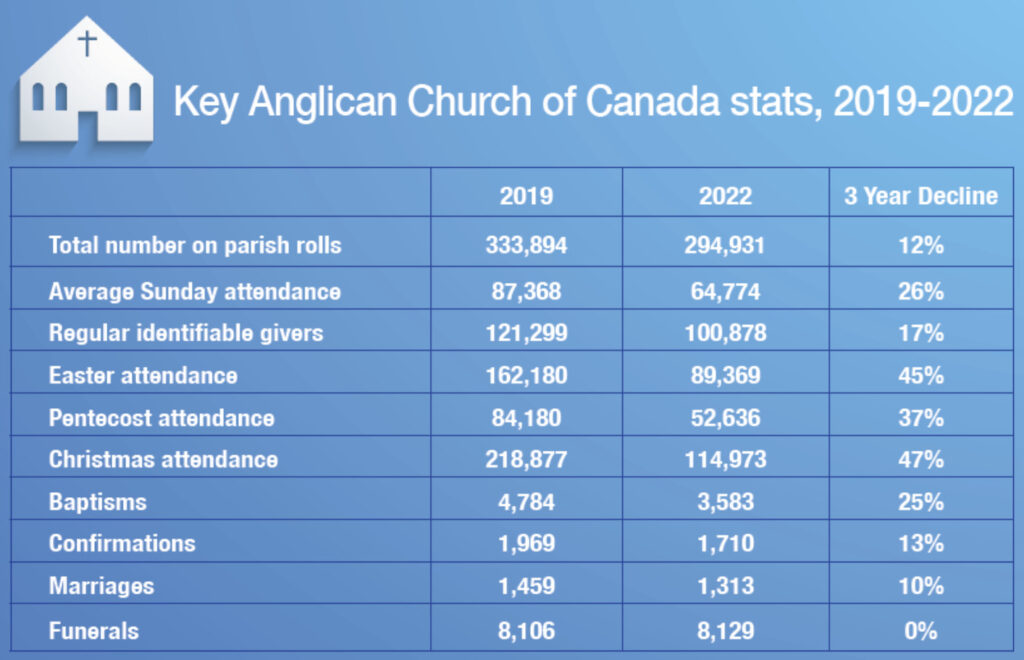
  A drop in diocesan contributions to the national budget along with lingering financial uncertainty spurred a conversation about the long-term stability of the Anglican Church of Canada’s finances in a Nov. 24 session of the Council of General Synod (CoGS).