Omnishambles is the Oxford Dictionary’s word of the year

From here:

Take a word meaning “all” and add it to a word meaning “mess” and you have Britain’s word of the year, as chosen by the Oxford University Press: omnishambles.

It’s a noun, informal, that refers to “a situation that has been comprehensively mismanaged, characterized by a string of blunders and miscalculations,” according to the lexicographers.

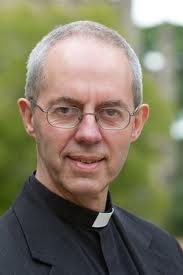
It’s a word with which Archbishop Justin Welby should familiarise himself as soon as possible.

Justin Welby intends to listen attentively to the “LGBT communities”

A community is either a group of people living near one another or a group of people with the same interests. Since lesbians are interested in women, homosexuals are interested in men, bisexuals are interested in both and transsexuals are confused about who they are interested in, that amounts to four “communities”. He seems to have forgotten that the sexual deviancy alphabet has gone forth and multiplied to include at least LGBTQQIP,  Queer, Questioning, Intersex, and Pansexual; by this time next year there will undoubtedly be more. Where will he find the time to listen to them all?

And what about the heterosexual “community”? Will he listen to them? Probably not; no-one listens to them.

I suspect “LGBT communities” was a circumlocutory way of saying Changing Attitude.

It would have been far more interesting, refreshing and radical if he had announced that he wants to listen attentively to same-sex attracted individuals who are attempting – with little help from the church – to resist the attraction. Too much to hope for, I suppose.

From here:

On another divisive issue within the faith, he said that there must be “no truck with any form of homophobia, in any part of the church” while seeming to acknowledge the difficulty that view causes foreign adherents.

“What the church does here deeply affects the already greatly suffering churches in places I’ve mentioned like Nigeria,” he said. “I support the House of Bishops’ statement in the summer in answer to the government’s consultation on same-sex marriage. But I also know I need to listen very attentively to the LGBT communities, and examine my own thinking carefully and prayerfully.”


St. John’s Shaughnessy is only attracting 40 people to its main Sunday service

The church building will hold over 800 people and before the Diocese of New Westminster acquired ownership of it, over 800 people attended the church.

Now, under the liberal regime of Bishop Michael Ingham, around 40 people are attending. Rev. Michael Fuller announced the number in his November 4th sermon:

Justin Welby’s assessment of Rowan Williams

From here:

I want to say at once that one of the biggest challenges is to follow a man who I believe will be recognised as one of the greatest Archbishops of Canterbury, Rowan Williams.

He is some one with a deep love for Jesus Christ, an infectious spirituality, extraordinary integrity and holiness, immense personal moral and physical courage, and of course one of the world’s principal theologians and philosophers.

To be fully serious, the church world wide owes him a great debt, more than it knows, and I shall be continuing to seek his advice and wisdom. I can only wish him, Jane and the family a wonderful end to his time at Canterbury and joy in their new roles.

One can only hope that he was simply being polite.

The new Archbishop of Canterbury

As of this writing, it hasn’t been officially announced, but it seems reasonably certain that the Bishop of Durham, Justin Welby is to become the next Archbishop of Canterbury.

Welby was baptised at Holy Trinity Brompton, is supposedly a charismatic evangelical and, having been in  business rather than academia, unlike his predecessor has his feet planted firmly on the ground. It is even possible to understand what he says without getting a headache.

All this seems like good news for theologically conservative Christians.

Yet, during his tenure as Dean of Liverpool, he authorised John Lennon’s atheist dirge, “Imagine” to be played on the church bells and gave his blessing to the Night of the Living Dead Halloween service.

While speaking to the TEC house of bishops in March 2012, he proclaimed himself disabused of the “myth that TEC is only liberal” and his enthusiasm for Indabas, either of which are enough to convict him of naivety, obsequiousness or both.

Giles Fraser likes him – not a good sign – and tells us that Welby thinks the Occupy movement was on to something and, in keeping with the Church of England’s obsession with rich bankers, is sitting on a commission to sort out corruption in the banking industry. Welby is a firm believer in “systemic or corporate sin”, a notion that, for a Christian, I think is rather peculiar insofar as the idea of Jesus dying for the sins of the Bank of England seems to me to be derisory.

The BBC informs us that, while Welby has defended the church’s right to oppose same sex marriage, “he has also been keen to accommodate opposing views expressed from a position of deeply held faith” – it doesn’t matter how wrong you are as long as you sincerely believe you are right, type of accommodation. Not a particularly encouraging thought for ACNA and ANiC who decided that the consecrating of a homosexual bishop and the blessing of same sex unions were not things that could be accommodated.

The harshest words I have seen in the mainstream media have come from a retired priest, Peter Mullen, who is convinced that Welby is one of the “Left-wing modernisers, devotees of all the secular fads such as diversity, social cohesion, political correctness and, of course, apostles of that sublime superstition, global warming.”

Time will tell, but on the face of it, it seems unlikely that those of us in North America who have left TEC and the ACoC will find a staunch ally in Welby. His speciality seems to be Reconciliation; the problem is, until there is repentance, a change of heart in at least one of the parties, it’s difficult to see how reconciliation is possible no matter how gifted the reconciler.

There is at least some good news: there are subtle intimations that the new Archbishop of Canterbury is a Christian.

Bishop Sue Moxley tries to add to the Five Marks of Mission

At the meeting of the Anglican Consultative Council in New Zealand, she wanted to add a sixth: “to advance peace, eliminate violence and reconcile all.”

You can always count on a Canadian bishop to come up with something sufficiently nebulously utopian that no-one can openly disagree with it. And why would they? Everyone is secretly convinced that, being manifestly unattainable, it will make few demands, yet it will distract from the more tangible woes of the Anglican Communion; and that’s what the meeting is all about, after all.  The motion was defeated, but the substance was tacked on to number four which now reads:

To seek to transform unjust structures of society, to challenge violence of every kind and to pursue peace and reconciliation.

Now, to paraphrase Ps 46:9, we can expect wars to cease to the ends of the earth, the bow will be broken, the spear shattered and the oceans will stop rising. Oh, hang on, that last bit has already been done.

Still, I’m very glad we are left with only five marks of mission; mainly because I think Fatuous Five has a better ring to it than Scelestious Six.

Farewell USA


I know it’s a cliché, but a democracy does get the government it deserves and, apparently, what the US deserves is a con man who has convinced the gullible that he can give them what they want: unlimited, unearned, undeserved hand-outs. God’s punishment to the Romans in Romans 1 was not to rain down fire from heaven, but to allow them to have what they wanted unfettered by God’s restraining morality; here we go again.

Not to worry, though: the fall of a civilisation is a reminder for Christians that we live in two kingdoms, the more important of which is a kingdom that can never be shaken: the kingdom of God.

Right Reverend Justin Welby a good bet for the next ABC

From here:

A former oil executive who has been an Anglican bishop for only a year and is strongly opposed to gay marriage is rumoured to be on the verge of being named as the next Archbishop of Canterbury.

Bookmakers Ladbrokes suspended betting on Justin Welby, the Bishop of Durham, following a flurry of bets that he is to be the 105th head of the Church of England and leader of the 77 million-strong Anglican Communion worldwide.

Lambeth Palace declined to comment on suggestions that an announcement, which would initially come from Downing Street, could be made as soon as Thursday this week after a lengthy selection process which was last month deadlocked over its shortlist of successful candidates.

In case anyone is in any doubt as to the process for choosing an Archbishop of Canterbury, the following guide to choosing an ordinary bishop may prove enlightening:

Continuing Indaba to….. continue

What a relief. For a moment I thought someone might have put it out of its misery, thereby preventing further conversations aimed at diverting attention away from the dire peril threatening to rend the Anglican Communion asunder.

From here:

The core values of the Continuing Indaba were defined in a paper  by John Mark Oduor of Kenya He summoned the community to meet under the cross of Christ,” for the healing, reconciliation and unity of the community and the world” The core values he identified are:

·       The priority of Relationship

·       The need for Conversation

·       The significance of A Place of Meeting

·       The Appreciation of our Uniqueness within a whole community

·       Forgiveness and healing

[…..]

When the time came for the ACC to vote on a proposed resolution regarding the future of Continuing Indaba, several delegates suggested further additions, including a suggestion from Bp Samson Mwalunda of Kenya, that Continuing Indaba should be a process to undergird all pan-Anglican conferences. There was another suggestion that Continuing indaba should have a commitment to the ultimate resolution of issues.

ACC Chair, Bp James Tengatenga, offered the members a motion to seek to refine the resolution, or to vote on the existing one. By a narrow margin, the ACC voted to not accept any amendments, and a majority then voted in favour of the unamended resolution.