
Decline and Fall

Paul Pennyfeather was reading for the Church at Scone College Oxford. The hapless Pennyfeather was relieved of his clothes by a group of drunks who didn’t like the look of Pennyfeather’s old school tie. In the words of the Master of Scone:

“‘The case of Pennyfeather,’ the Master was saying, ‘seems to be quite a different matter altogether. He ran the whole length of the quadrangle, you say, without his trousers. That is indecency. It is not the conduct we expect of a scholar.’”

For poor Pennyfeather it was downhill from then on. He ended up a teacher at a Llanabba Castle school in North Wales, a fourth-rate school according to the grading: Leading School, First-rate School, Good School, and School.

To find out what happens next, you will have to read Evelyn Waugh’s Decline and Fall.

The point is, it didn’t matter whether the removal of Pennyfeather’s trousers was voluntary or not; he was seen to be running trouserless; for appearances’ sake, something had to be done.

We will probably never know for sure whether Steve Wood was caught metaphorically sans-trousers, but the disastrous mess that ACNA has brought upon itself by thoroughly botching the plausible complaints against its most senior cleric means that, for the sake of appearances, it was almost inevitable that Wood was brought to trial.

Similarly, because appearances suggest that ACNA has been spending considerable energy in protecting the institution, I suspect that there will be pressure to find Wood guilty – to convince everyone that it’s doing no such thing.

The recent Report from the College of Bishops attempts to quiet the troops with vague promises to do better. I’m not sure that it reaches beyond the stage of advanced lip service.

I attended the first Provincial “Office Hours” with Bishop Dobbs and Provincial Leaders Zoom meeting. I was hoping for an interactive session with open discussion. Instead it was a format where questions were submitted in writing and the panel answered them – or didn’t.

My questions were:

  1. Why did it take so long to take the allegations against Steve Wood seriously – a year or more, I gather?

  2. It leaves one with the suspicion that it may never have been addressed had not the Washington Post article appeared. Comments?

The answer I received to part one was: that’s how long the process took. There was no comment on part two. This, it seems, is how you rebuild trust.

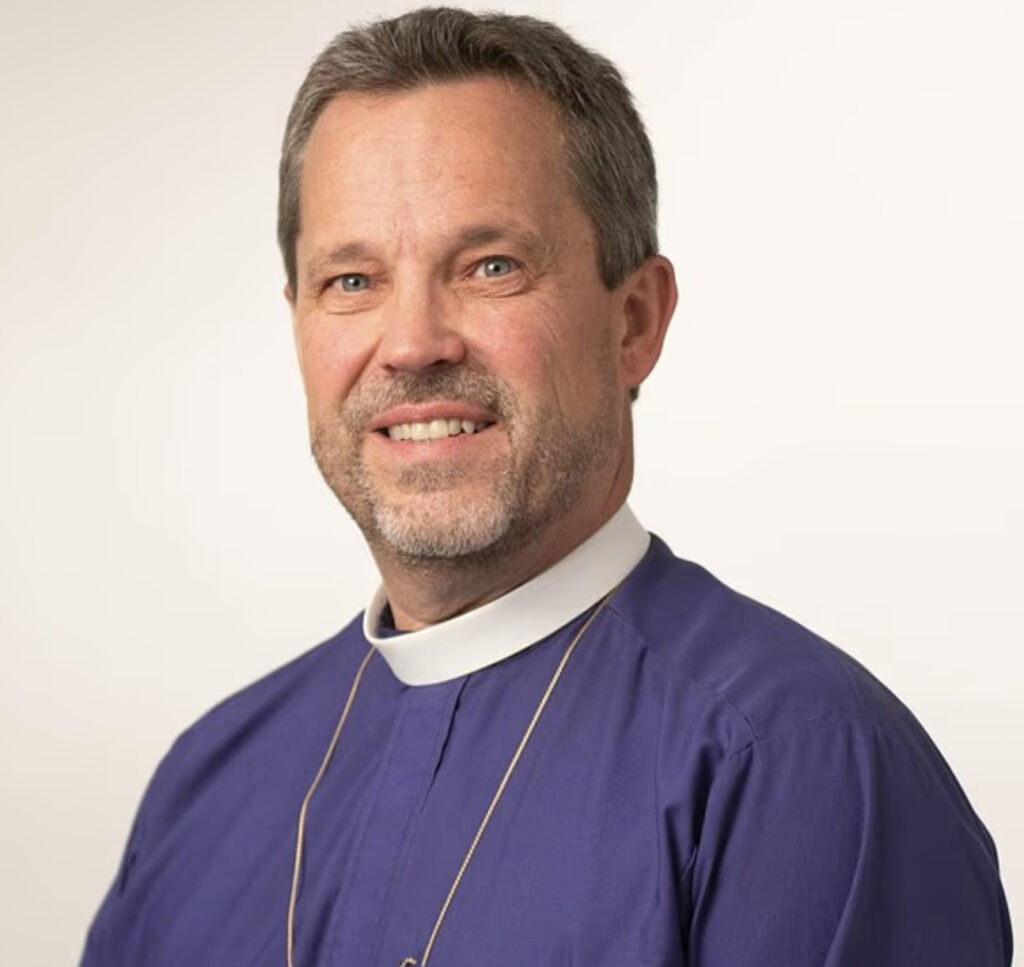
Archbishop Steve Wood hit with sexual misconduct and abuse of power accusations

This doesn’t look good:

The highest-ranking member of the Anglican Church of North America has been hit with a slew of allegations – including sexual misconduct, abuse of power, and plagiarism.

A recently revealed presentment, which is a formal report that details offenses by leaders in the church, alleges that Archbishop Stephen Wood, 62, attempted to kiss a female employee, plagiarized his sermons, and bullied church staffers before he moved up in rank.

The ACNA was founded in 2009 by former members of the Episcopal Church who opposed the congregation’s openness to LGBTQ+ Christians and progressive causes.

The religion is a form of Christianity, following the preaching in the Bible and celebrating traditional holidays like Christmas and Easter.

Over a decade after its inception, the church found itself riddled with controversy as new allegations surfaced against the ACNA’s senior-most official.

Claire Buxton, 42, has spoken out about her experience working as the children’s ministry director at St. Andrew’s Church in South Carolina while Wood was the rector.

Buxton detailed her experience in one of six affidavits submitted in the presentment, reviewed by the Washington Post, alleging Wood’s behavior.

She also claimed in an interview with the Post that last spring that Wood tried to kiss her in his office.

‘He put his hand on the back of my head and tried to turn it up towards him while he slowly brought his face towards my face to kiss me,’ Buxton told the outlet.

She said she avoided the kiss by dropping her head and gave him a side hug instead before running out of the office.

Although she said that the alleged kiss occurred in 2024, Buxton insisted that Wood’s inappropriate behavior began years before.

She told the Post that in October 2021 he hugged her at a celebration ceremony, and his hand slowly slid down her back.

Buxton said she told her parents about the awkward encounter, admitting that it felt ‘sensual’ and that she speculated he was attracted to her.

Her parents brushed it off, so she continued her work as the children’s ministry director.

However, a year later, Wood allegedly divulged inappropriate information to Buxton in his office.

He allegedly told her that he fired a church staffer because she ‘slept with everyone.’ That same year, Wood began giving Buxton mysterious checks from a church account.

[…….]

Numerous other members of the Anglican Church expressed concern with Wood’s behavior, including Reverend Hamilton Smith, the rector of St. Thomas’ Church in South Carolina.

In a letter obtained by the Post, Smith told Wood: ‘I do not feel you have moral authority required to hold the office of Bishop.’

Smith said he believed Wood plagiarized his sermons, shamed colleagues, and accepted a $60,000 truck provided by the diocese.

‘You have told me numerous times that you are a sinner who had “a really bad year/a horrible season” in which you did things you now regret. While I rejoice in this self understanding, grace and forgiveness have limits,’ Smith wrote in the letter.

Reverend Rob Sturdy, another priest who submitted an affidavit, wrote that Wood frequently boasted about a woman from another church whom he could’ve had a relationship with if he pursued it.

ACNA continues burrowing down the woke rabbit hole

From here


ACNA’s New Vice-Chancellor for Safeguarding

In the midst of a difficult week for the Anglican Church in North America, there is a happy announcement: we have a Vice-Chancellor for Safeguarding, Jeannie Rose Barksdale! She has quite the resume, including a Stanford degree in Political Science and Comparative Studies in Race and Ethnicity.

Now in case any reader thinks Comparative Studies in Race and Ethnicity is grievance studies, you need to repent of noticing. Noticing is Whiteness.

Since then she has been busy, including being an active member of Church of the Advent, Washington, D. C., in the Diocese of Christ Our Hope. But she has found time to write. So let’s meet Jeannie Rose Barksdale in her own words.

Back in February, she found time to write for that erudite and balanced Christian publication, Sojourners. In it she is sad about a repeat shoplifter getting caught at Target. The shoplifter needed more love. She is also “feeling powerless and overwhelmed.” Why?

Lately, it has been far easier to despair than to love concretely. The Trump administration’s strategy of flooding the zone has made me feel powerless and overwhelmed — which is, as Adam Russell Taylor recently described it, precisely the point. Even while wrestling with lament, I’ve wanted to move toward contributing to addressing injustice to counter the pervasive injustice that occupies so much of our news. But I’ve just not known how.

Yes, the first days of President Trump II were so awful, it was difficult to love, to even know how to love. Oh, the “wrestling with lament”!

You may have guessed that I don’t much like Donald Trump. I think he is a bombastic, egotistical oaf. Having said that, I have to admit that what he has done has not been all bad: I tend to think of his positive achievements as happy accidents. Since they have all been bludgeoned into existence by executive order, they will all be undone in four years or so when an extreme leftist gets into power and uses the same technique. And I do not doubt that in four years the anti-Trump pendulum will swing with vengeance to the left.

Still, all this is temporal vanity that has little bearing on the eternal matters that should preoccupy the church.

So, if Ms Barksdale is in that much mental distress over wordly events that are largly beneficial – even though enacted by a buffoon –  and ACNA has hired her, both she and ACNA are in serious trouble.

Rumblings of chaos in ACNA

Rt. Rev. Stewart Ruch III has been charged with the mishandling of sexual abuse disclosures and was being tried in an ecclesiastical court which was not open to the public.

The trial collapsed when the prosecutor, Alan Runyan, resigned because:

“the trial process had been irreparably tainted” by a member of the ACNA’s Court for the Trial of a Bishop who improperly questioned one of the prosecution’s witnesses for over an hour on the fifth day of trial.

The questioning allegedly brought in external material that had not been admitted into evidence by the court before the trial. This material, which pertained to the ACNA’s previous investigation rather than to the charges against Ruch, had been explicitly ruled improper by the court in an April 2025 pretrial order.

Archbishop Steve Wood appointed a new prosecutor so the trial could continue.

Meanwhile, Rachel Thebeau, the deputy prosecutor released a letter calling into question the integrity or competence – possibly both – of ACNA’s leadership. This was a career limiting move that led to her being persuaded to resign.

Archbishop Steve Wood has issued his own letter in response, a spectacle of duelling letters, defending himself and the other ACNA leaders tangled up in this:

The past few days have presented great challenges for our Anglican Church. As you may be aware, on Friday, a now-former employee of the province who was assisting in the prosecution for the ecclesiastical trial that is currently before the Court for the Trial of a Bishop, widely circulated a letter to individual members and clergy across the province that levels serious but misguided allegations against me, the provincial Chancellor, the Executive Director of the Province, and the Court. The letter suggests that we acted unethically and compromised the integrity of the Church. These accusations have sent a wave of pain, confusion, and division rippling across our province.

This makes me cringe, since the focus seems to be less on the truth or otherwise of Thebeau’s accusations and more on the aggravation it is causing ACNA leaders.

The College of Bishops has been pressed into service with yet another letter to help circle the ecclesiastical wagons. Maybe I’m imagining it, but it reads rather like a Trump cabinet meeting where toadying is the order of the day. The standout sentence is this piece of Newspeak: ” We are grateful for their ongoing commitment to appropriate levels of transparency”

Where is the truth in all this? I don’t know. What I do know is that the whole process is exceedingly murky and that makes me very suspicious.

There are some more opinions in the latest Anglican Unscripted:


Losing the wonder of salvation

Entropy is a measure of a system’s disorder; with time, it increases. When applied to the universe, it is a degradation of matter and energy to an eventual state of cold uniformity. When the universe reaches maximum entropy, it will be lifeless and inert. Reversing entropy is the stuff of science fiction, although I imagine it will happen at Christ’s return when the universe is remade.

I’ve come to think that there is also a form of spiritual entropy. When first we are saved from sin and reconciled to God, we are filled with the wonder of it all. John Bunyan put it like this (my emphasis):

Now I saw in my dream, that the highway up which Christian was to go, was fenced on either side with a wall, and that wall was called Salvation. Isaiah 26:1. Up this way, therefore, did burdened Christian run, but not without great difficulty, because of the load on his back.

He ran thus till he came at a place somewhat ascending; and upon that place stood a cross, and a little below, in the bottom, a sepulchre. So I saw in my dream, that just as Christian came up with the cross, his burden loosed from off his shoulders, and fell from off his back, and began to tumble, and so continued to do till it came to the mouth of the sepulchre, where it fell in, and I saw it no more.

Then was Christian glad and lightsome, and said with a merry heart, “He hath given me rest by his sorrow, and life by his death.” Then he stood still a while, to look and wonder; for it was very surprising to him that the sight of the cross should thus ease him of his burden.

When – or just before – I became a Christian in 1978, my first prayer was that if all the claims of Jesus were true, I would somehow be able to believe them. And, while you are at it, please give me a hand quitting smoking. The next morning I woke up convinced that Jesus is who he claims to be. And as a non-smoker.

I was overcome with the wonder of it all. How could He save a wretch like me? Numerous things that had made no sense suddenly came into focus like pieces of a giant jigsaw puzzle flying together with a loud click. Not everything became clear, of course: I still don’t understand quantum mechanics.

Over time, spiritual entropy sets in: the wonder of it all fades and I have once more to bring the early days to mind; to do otherwise is to grow cold to the Gospel or even forget what it is.

The church has the same problem. It doesn’t just grow cold, though, it replaces the Gospel with something else and calls it the Gospel. Social justice is the usual substitute. Or “equal marriage” as it’s called. Or “climate justice”. Or “inclusion”.

There is no wonder in these, just dreary shabbiness.

Eager to enter the competition for who can pollute the Gospel with the most drearily shabby, cliché-ridden tripe from the fevered imagination of underemployed theologians, ACNA has joined the race.  The Matthew 25 Initiative is live and is inviting all who wish to abandon their first love to join it. And lose the wonder of it all.

On social justice, ACNA now in hot pursuit of TEC

I recently received an email extoling the benefits of attending a new ACNA course: Living Isa58, a project of the Matthew 25 Initiative (M25i for those who dislike typing).

There is a lot of what I would consider gobbledegook in the Matthew 25 Initiative. Here, (you have to sign up to read the whole thing) for example:

God’s purposes for this world are not for its destruction, but for its renewal. In the end, shalom is rewoven through all of creation and within all of God’s people. Peacemaking, then, is the work of co-substantiating this hope, the Kingdom of God, with God. It is pursuing justice and the reweaving of shalom with an orientation to healing and repair.

That sounds like what William Buckley used to call immanentizing the eschaton, although the next sentence was included to allay that suspicion:

God leads the work and will accomplish it fully at the final consummation of the new order, when heaven and earth become one. But today we are God’s co-creators: we are given the agency and ability to help put flesh on this coming Kingdom now. In word and deed, it is the very work of declaring the good news of the gospel: that Jesus is King and His Kingdom is at hand.

I remain suspicious and wonder whether the authors remember that Jesus also said “My Kingdom is not of this world”.

Archbishop Steve Wood has recorded a video on the Matthew 25 Initiative:

It was recorded in March and has had 285 views. One of those views was me. Such is the level of interest in what he had to say.

In his video he laments that some of what he says might be interpreted as political whereas, really, it is just the Gospel. He’s right, that is how I interpreted it. I have no problem with clergy venting their political inclinations, I just wish they wouldn’t call it the Gospel.

That’s how the rot set in with TEC and the ACoC.

For more evidence that this is political – generally left-leaning – the M25i’s white paper on peace-making (you have to sign up to see it) quotes a  Palestinian theologian Rev. Dr. Mitri Raheb:

“Rev. Dr. Mitri Raheb states, “Hope is what you do.”

I’m not sure what he means by that but, elsewhere, Rev. Dr. Mitri Raheb is perfectly clear and perfectly political: Israel is committing war crimes in Gaza and the solution is political action. He doesn’t mention Hamas or any responsibility it might bear.

From here:

Yet, the more I thought about it, the more I started understanding her answer. In this context of a war crime, committed against the civilian population in Gaza, what is needed is more than prayer; what is needed is advocacy, what is needed is political action, what is needed is for people to go on the streets demanding an end to this aggression.

Similarly an M25i (yes, I know the abbreviation is irritating. It sounds like a UK motorway) white paper on immigration regrets that:

Churches in North America may not always be able to substantially influence public policy or affect changes to current laws that seem unjust, out-dated or contradictory.

The author clearly wants to influence public policy, a position I wouldn’t necessarily quarrel with had his archbishop not claim that it’s all about the Gospel not politics.

To be clear, as individuals I’m all for the Gospel influencing our political choices, but I’m wary when clergy start equating those choices with the Gospel.

Even allowing for the fact that, on occasion, I am given to undue pessimism, none of this looks good for ACNA.

ACNA becomes Politically Correct

It was probably inevitable: the pull towards surreptitious halo polishing thinly disguised as righteous breast-beating was too strong to resist.

A group of ACNA clergy has published a letter lamenting the lack of diversity within its ranks, a promise to do better and an acknowledgement that Man’s real problem is not sin, it’s racism.

Read the whole thing here:


A Letter to Fellow ACNA Clergy: On Anti-Racism and a More Diverse and Just Anglicanism

[….]
We see and grieve the racism and discrimination that exists and has a deep cultural and structural influence in our society, in our communities, and in our churches. The recent tragedies of Ahmaud Arbery, Breonna Taylor, and George Floyd are simply the latest in a long line of harrowing examples of these deeply embedded systemic realities. We see and grieve that our brothers and sisters of color, including many in our own dioceses and parishes, have been and continue to be profoundly affected by these realities.

Against this backdrop, we offer the following confessions and make the following commitments.

Confessions

We confess that we have failed to see, understand, and address the expressions of racism, both personal and systemic, that plague our society, communities, and churches.

We confess our slowness to listen to the dismay and discouragement of our brothers and sisters of color, especially those in our own province, and have neglected to cultivate hospitable spaces for them to flourish.

We confess that our ignorance, complacency, and silence have undermined our fidelity to the Great Commandment to love God and love our neighbor (Matt. 22:36-40), which fundamentally calls us into disciplines of anti-racism.

An interview with Archbishop Foley Beach

Apparently, it would help foster reconciliation if TEC stopped suing ACNA congregations. Who knew?

Another interesting point in the interview is that the Delphi method – beloved of process addicted corporate zombies – employed in the meeting was less than effective.

From here:

Dr Beach’s presence at the gathering was at the insistence of the GAFCON Primates, who had said earlier that they would not attend a meeting without him. He was widely expected to be asked to leave after the first two or three days, but instead stayed for the whole of the meeting, and was included in a number of the votes the Primates took.

He said, however: “I did not vote when it came to the Episcopal Church. In my conscience I didn’t feel that that was appropriate. I’m not part of the official Anglican structures yet, although I’m in communion with provinces that represent the majority of the Anglican Communion.

“They basically gave out pieces of paper when it was time to vote, and I just refused it.”

The Canterbury gathering was the first time that Dr Beech met the new US Presiding Bishop, the Most Revd Michael Curry. “We were very cordial with each other, but we didn’t have any deep conversations.

“But one thing I did say, and I said this in front of the other Primates, because I was asked a question: one thing that would help towards reconciliation and collaboration would be if they call off the lawsuits. Right now they’re suing numbers of our congregations for millions of dollars and property and church buildings, and on and on it goes. They could call that off in a moment. It’s going to be hard as long as we’re in court against each other.”

Dr Beach described the mood of the meeting as serious and, at times, tense. But he had been treated at all times, he said, “with respect and dignity as an Anglican Primate”. He scotched the rumours of confiscated phones and a “divide and rule” approach to preventing the conservatives getting together.

“There was a time when we were wrestling with an issue, so we all divided into groups, and came back — and it didn’t help. It just didn’t help.

“But at any time Archbishop Welby would say: ‘I think it’s time for you to gather in your own groups, or maybe you just want to go for a walk,’ and gave time for us to meet together.

“I think that’s part of why people were able to stay engaged and be a part of it, because we were able to communicate.”

The departure of the Archbishop of Uganda, the Most Revd Stanley Ntagali, was accepted as a consequence of the canons passed by his provincial synod, which prevented his sitting in a meeting with the US Episcopal Church or the Church of Canada unless they repented.

“For him to even show up was really putting him out on a limb with his people,” Dr Beach said. “And the longer he sat there — he’s such a godly man with such a tender conscience — the more he came under the conviction that he cannot offend or hurt his people. He didn’t leave out of anger. . . he just felt he was not being faithful to his duties as an Archbishop. And so we blessed him, and he blessed us. And then we continued on.”

He was optimistic about the future acceptance of ACNA. “What this meeting did was allow other folks, who had only heard rumours about us, to get to know what we are, what we’re not, what God is doing in our midst.”

The question of admitting ACNA as a full member of the Communion was raised, but referred to the Anglican Consultative Council (ACC), which next meets in April. In the full communiqué released by the Primates on Friday afternoon, this was described as a matter of “polity” — i.e. something on which the Episcopal Church will not be able to vote if the ACC accepts the sanctions imposed by the Primates’ gathering.


Michael Coren can’t count

This shouldn’t come as a complete surprise, since most of his other reasoning faculties abandoned him, too, when he converted to liberalism. In this predictably tendentious article about the Canterbury Primates’ gathering, he calls ACNA “a small group of Anglicans”.

ACNA presently has over 100,000 members and an average Sunday attendance of over 80,000, numbers that approach, if not exceed (who knows, the ACoC is too shy to publish statistics) those of the entire Anglican Church of Canada – to which Coren has just joined himself.

Up to now small groups of Anglicans, including a fringe in Canada, have left the communion over more progressive positions around sexuality, and while there has never been a central authority or leadership resembling that of Roman Catholicism, there is now a severe risk of a formal break between the Western churches and many of those in the developing world. What has traditionally been a loose but warm collective could become an absolute separation.

The “fringe in Canada” would be ANiC, the Christian version of Canadian Anglicanism.